September Fed Meeting: What It Means for Savers
The Federal Reserve's September meeting could affect savings rates. Learn what you should know about APYs, high-yield savings accounts, CDs, and how the Fed's decisions on rates might influence your finances.
What the Fed’s September Meeting Means for Savers
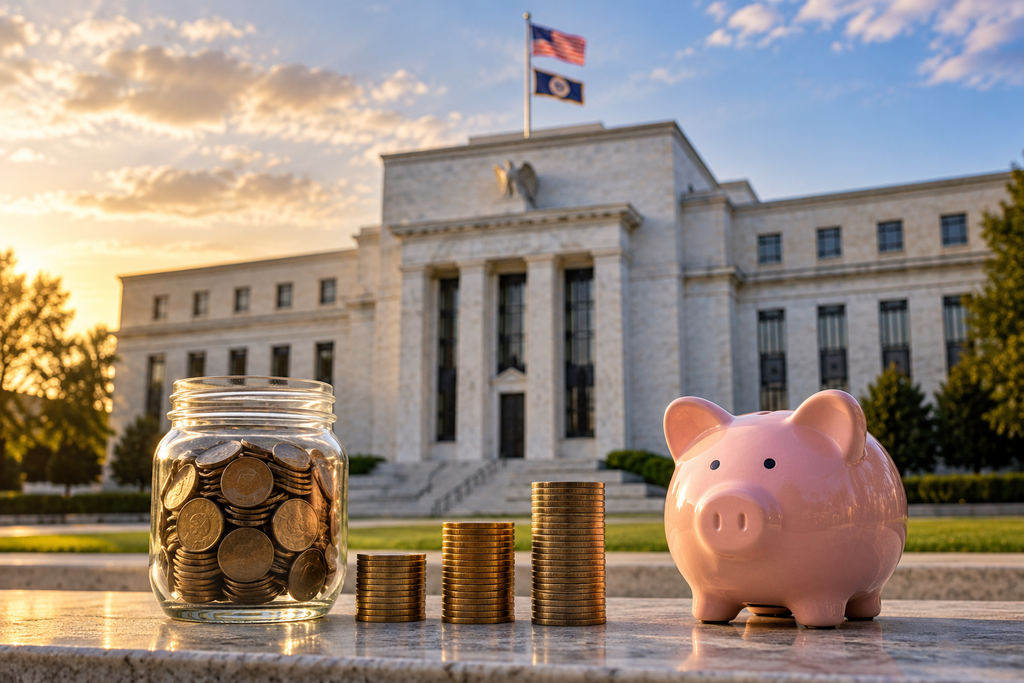
The results of the Fed’s September meeting could affect the interest rates you earn on your savings.
The Federal Open Market Committee (FOMC) will meet on September 15–16, 2026, with its official rate decision and press conference scheduled for September 16.
Right now, the federal funds target range is 3.50% to 3.75%. Although the Fed held rates steady in July, three FOMC members supported a 25 basis point increase.
For savers, the main concern isn’t just whether rates rise, fall, or stay unchanged.
The main concern is how your savings APY adjusts and whether your money keeps earning a competitive interest rate.
How will the Fed’s September meeting impact savers?
The Fed’s September meeting matters because its decision on interest rates can influence the APYs offered on savings accounts, money market funds, and CDs.
However, the Fed doesn’t directly set the APY for your savings account; those rates are determined by banks and credit unions.
Here’s the link: the Fed’s choices influence short-term rates, which impact banks’ borrowing costs, then the deposit rates they offer, and ultimately your APY.
The effect might not be immediate and can differ between banks.
Will savings account rates change after the Fed’s meeting?
They might shift, but not always in line with the Fed’s rate changes.
Some banks adjust deposit rates quickly, while others take longer or only partially apply the changes.
That’s why the APY you receive matters more than the Fed’s base rate.
What is the current interest rate established by the Fed?
As of September 2026, the federal funds target range remains between 3.50% and 3.75%.
During its July 29 meeting, the FOMC decided to hold the range steady. The committee observed that economic growth was steady, though inflation stayed above the 2% long-term goal.
Still, three members dissented, pushing for a 25-basis-point increase.
This matters because it shows there’s ongoing discussion within the Fed about where interest rates will head next.
When is the Fed’s September meeting scheduled?
The Fed’s September meeting will take place from September 15 to 16, 2026.
The FOMC statement and the Federal Reserve’s press briefing are both scheduled for September 16.
For savers, the press briefing can be almost as crucial as the rate decision itself, providing clues about the Fed’s future policy directions.
What impact could lower Fed rates have on your savings?
When the Fed cuts rates, it typically results in lower APYs on savings accounts.
Still, this doesn’t mean your savings rate will fall by the exact same amount.
For example, if the Fed cuts rates by 0.25%, your bank could:
- Lower your APY by 0.25%
- Lower it by a smaller margin
- Lower it by a larger margin
- Keep the rate unchanged for a while
Your rate adjustment will depend on your bank, the current market conditions, and the level of competition for deposits.
Is it smart to lock in a CD before a possible rate cut?
Picking a CD can be a good choice if you want a fixed interest rate and don’t need to access your money during the term.
This approach is particularly worth considering if you expect interest rates to fall.
But there’s a downside: savings accounts provide more flexibility.
CDs offer greater rate stability, so avoid locking up your emergency fund just because you expect the Fed to reduce rates.
How do savings accounts react when the Fed increases rates?
When the Fed raises interest rates, it commonly causes savings account rates to rise as well.
Banks and financial institutions often increase APYs to attract deposits, particularly on high-yield savings and money market accounts.
However, it’s not guaranteed that your bank will pass the entire rate hike on to your account.
That’s why savers should compare the actual APY they receive with other competitive options available.
How to Get Ready for the Fed’s September Meeting
You don’t need to predict the Fed’s next move. What really counts is knowing the return your savings are currently earning.
Spend a few moments before September 16 reviewing the details of your savings account.
1. Check Your Current APY
Don’t assume your interest rate hasn’t changed since you opened your account.
Check the APY your account is currently providing.
Remember that savings rates can change and vary over time.
2. Compare your current APY with leading high-yield savings accounts
If your bank’s rate is close to the national average, see how it compares to today’s top high-yield savings accounts.
A difference of just a few percentage points can add up to hundreds more interest on larger balances.
3. Assess how much liquidity you need
Ask yourself: Will I require access to these funds within the next few months?
If yes, then a savings account with easy withdrawal options may be your best bet.
If not, consider CDs or other short-term alternatives that fit your financial goals.
4. Confirm if your account is protected by insurance
Confirm that your bank deposits are protected by FDIC insurance. For eligible credit unions, check for NCUA coverage.
Don’t risk the security of your funds just to earn a slightly higher APY.
Which economic indicators will influence the Fed’s September decision?
The Fed’s choice in September comes after several important economic reports.
The Bureau of Labor Statistics has announced the following releases:
- August PPI: September 10
- August CPI: September 11
- August Employment Situation: September 4
The CPI report is especially important because it arrives just a few days before the FOMC meeting.
The Federal Reserve targets an inflation rate of 2% in the long run.
This means inflation data will remain crucial as policymakers evaluate if monetary policy is still tight enough.
Why does the CPI matter for savers?
Because inflation reduces the real purchasing power of your savings.
A 4% annual percentage yield definitely sounds attractive.
But if inflation is close to or exceeds that rate, your actual buying power may not grow as much as your balance suggests.
Savers shouldn’t just chase the highest APY on offer.
The priority is to preserve and grow purchasing power while keeping your money safe and accessible.
Fed’s September meeting: Important factors savers should watch
There are three key aspects to focus on when the Fed makes its announcement.
H3: 1. The decision on interest rates
What choice will the FOMC make?
- Raise rates?
- Maintain current rates?
- Cut rates?
This is the main announcement, but it doesn’t reveal the whole picture.
2. The Fed’s refreshed economic outlook
Along with the September meeting, the Fed shares its updated economic projections.
These projections provide insight into the Fed’s expectations for inflation, employment, and upcoming interest rate decisions.
3. The Fed’s press conference
Remarks by Fed Chair Jerome Powell often influence expectations about future monetary policy.
This matters for savers because the Fed’s current choices can affect the interest rates offered on savings accounts moving forward.
My Take
The Fed’s September meeting is worth watching, but I wouldn’t build your savings strategy around trying to guess Jerome Powell’s comments on September 16.
For most savers, the key question is actually much simpler:
What APY is your savings account currently offering?
If your rate is around the national average but other accounts offer rates near 4%, you may have a good opportunity to increase your returns.
There’s no need to try predicting what the Fed’s next move will be.
You don’t have to constantly move your money from place to place.
And you don’t need to jump after every account offering just a slightly better rate.
Instead, check your APY, protect your emergency funds, consider trustworthy options, and pick the account that matches your planned withdrawal schedule.