How could your savings account be quietly losing value without your awareness?
Find out why your savings account balance could be growing while its actual value declines—and explore how inflation, APY, taxes, and fees all affect what you truly earn.
Warning: your savings account could actually be costing you money
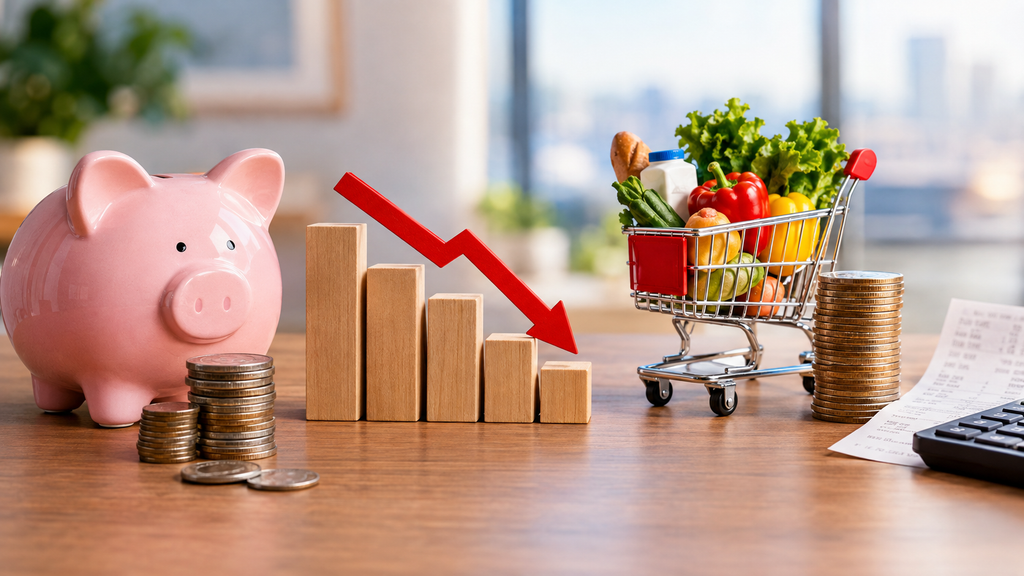
When your savings account balance grows month after month, it’s easy to assume your money is earning effectively.
But a higher dollar balance doesn’t always mean your purchasing power is increasing.
So the real question isn’t just, “Is my savings account earning interest?”
The crucial point is: Does the interest your savings account generates keep pace with inflation and taxes to maintain your money’s true value?
In What Ways Can a Savings Account Actually Lose Value?
Your savings account’s real value can decline if its interest rate is lower than the rate at which prices increase.
Even though your bank statement may show a growing balance, when everyday expenses rise faster than your savings interest, the actual purchasing power of your money drops.
- A simple way to think about it is: Real return ≈ savings APY − inflation rate;
- For a more precise calculation: Real return = (1 + APY) ÷ (1 + inflation) − 1
For example, if your savings account offers a 0.64% APY while inflation is at 3.4%, your estimated real return before taxes would be about -2.67%.
While your dollar amount might remain steady or even grow, its purchasing power has certainly declined.
Is Your Savings Account’s APY Too Low to Keep Up?
One key reason many Americans lose real value on their savings is that their interest rates simply don’t keep pace.
Reported national average savings rates differ depending on the source. NerdWallet reports 0.37%, while Bankrate’s September 24 survey shows 0.64%.
Both figures point to the same concern: these average rates are far below the current inflation rate of 3.4%.
This gap is especially clear at large traditional banks, where savings accounts tend to offer very low APYs.
How Inflation Gradually Reduces Your Purchasing Power
Inflation doesn’t remove money from your account but lowers the value of every dollar you possess.
The latest U.S. Consumer Price Index for August 2026 showed a 3.4% rise in prices compared to the previous year.
Energy costs were significant, with gasoline prices increasing 3.9% in August alone.
These real-return figures represent inflation-adjusted values for better accuracy and are rounded for simplicity.
This graph also helps explain why “my account earned interest” doesn’t always mean “my money grew in real purchasing power.”
What’s Happening With Savings Account Rates This September?
September brought a surprise for savers: rather than cutting rates, the Federal Reserve increased its main interest rate.
On September 16, 2026, the Federal Open Market Committee raised the federal funds target range by 0.25 percentage points to 3.75%–4.00%.
The Federal Reserve stated that inflation remains elevated, and their decision is aimed at steering inflation back down to the 2% target.
Savings rates usually change in response to shifts in the federal funds rate, so this action could affect the interest banks pay on deposits.
NerdWallet reported that following the Federal Reserve’s September 16 announcement, multiple high-yield savings accounts increased their interest rates.
Still, this does not ensure that all savings accounts will offer higher rates right away.
Key Differences Between Traditional and High-Yield Savings Accounts
The difference between a traditional savings account and a high-yield savings account can be quite large.
On September 23, CNBC Select reported that the top high-yield savings rate it found was 4.21% APY, while the national average was only 0.37%, making the highest rate more than 11 times the average.
Bankrate’s survey from September 24, which used a different methodology, put the national average rate at 0.64% APY.
It’s crucial to understand why these differences exist: average rates vary based on which banks and methods each survey includes.
The main point is clear: don’t just assume your bank’s APY is competitive simply because the account is called a savings account.
This example isn’t a forecast. It’s designed to highlight how the APY you select directly affects the interest your savings will accumulate.
Could Taxes Lower the Real Value of Your Savings Account?
Yes. Even if your account’s interest outpaces inflation before taxes, the after-tax return might still fall short.
Interest earned in savings accounts is generally taxed as ordinary income under federal tax rules.
The IRS considers bank account interest taxable income, and banks typically report it on Form 1099-INT when applicable.
Your APY May Not Show Your Actual Earnings After Taxes
Suppose your savings account has an APY of 4.00%.
If your federal marginal tax bracket is 22% and you ignore state taxes, the interest remaining after federal taxes would be approximately:
4.00% × (1 − 0.22) = 3.12%
Given inflation at 3.4%, your expected after-tax return would actually be negative.
This doesn’t mean a 4% savings account is bad. Rather, it shows why looking only at APY can give an incomplete view.
Could Fees Be Eating Into Your Savings Account Returns?
Interest rates aren’t the only factor to consider.
Costs such as monthly maintenance fees, penalties for low minimum balances, and other charges can shrink or entirely offset the interest you earn.
For example, an account paying 0.50% APY on $10,000 earns around $50 annually before taxes. Yet a $5 monthly fee totals $60 per year, which exceeds the interest gained.
That’s why it’s crucial to evaluate a savings account based on its net returns rather than just the advertised APY.
Key Details to Examine About Your Savings Account
Before determining if your account is competitive, take these important factors into account:
- APY: What is the actual interest rate paid?
- Monthly fees: Are there regular charges?
- Minimum balance: Must you keep a set amount to earn the advertised APY?
- Rate conditions: Is the APY available to all or only under certain terms?
- Withdrawal or transfer rules: Are there any limits or penalties?
- Rate variability: Can the bank adjust the APY anytime?
- Deposit insurance: Is your money protected by the FDIC?
- Tax treatment: How much interest will you keep after taxes?
CNBC Select’s September 2026 guidance also points out that APY is only one factor in picking a high-yield savings account; fees, minimum deposit amounts, accessibility, and perks matter just as much.
Is Your Savings Account Still the Best Place for Emergency Funds?
Even if your savings are generating a low real return, it doesn’t necessarily mean you should move emergency money into riskier investments.
A savings account serves an important purpose by providing easy access and reliable stability.
For money you might need suddenly—such as an emergency fund, medical expenses, home repairs, or an upcoming purchase—having immediate access is often more important than seeking higher long-term returns.
FDIC insurance protects eligible deposits at insured banks, generally up to $250,000 per depositor, per bank, per ownership category. Savings accounts are included among these insured deposit types.
The real question isn’t whether you should keep savings at all.
Rather, it’s about whether your savings account is living up to your expectations.
H3: When a Savings Account Is the Right Option
Savings accounts work especially well for these situations:
- Building an emergency fund
- Funds needed in the near future
- Saving for short-term goals
- Cash that must avoid market risk
- Money that needs to be instantly available
The goal isn’t necessarily to turn your emergency savings into a complete investment portfolio.
The true purpose is to avoid holding large sums of cash in an account that pays so little that inflation gradually reduces your money’s purchasing power.
How to Tell If Your Savings Account Is Losing Value
This is a simple check you can do in just a few minutes.
Step 1 — Find Your Current APY
Log into your bank account and find the current APY instead of only looking at last month’s interest earned.
The APY reveals the yearly return, including the effects of compounding interest.
Step 2 — Compare It to Current Inflation
The Consumer Price Index for August 2026 showed an annual inflation rate of 3.4%.
If your savings APY is significantly below 3.4%, your money usually loses purchasing power before taxes, assuming that inflation rate remains steady.
Remember, the results won’t be identical each month since both inflation and savings APYs tend to fluctuate over time.
Step 3 — Compare Your Rate to Other Savings Accounts
September 2026 data reveals just how wide the variation in rates can be.
NerdWallet’s average savings rate nationwide is 0.37%, while their selected high-yield accounts average 3.66%. CNBC Select lists a top rate of 4.21%, and Bankrate reports a national average of 0.64%.
You don’t need to chase the absolute highest rate advertised out there.
Instead, concentrate on comparing APY, fees, terms, accessibility, and insurance coverage.
Step 4 — Calculate Your After-Tax Return
For instance, if you earn $500 in interest, you probably won’t get to keep all of it.
Work out federal and, if applicable, state taxes to understand your true earnings.
This is especially important if your savings balance is on the larger side.
Step 5 — Keep Your Account Under Regular Review
Interest rates on savings accounts don’t remain steady forever.
Bankrate notes that APYs on savings accounts frequently adjust following shifts in the broader interest-rate environment.
This implies that a savings account offering a good rate today may not stay as appealing in the future.
Reviewing your account every few months makes it simple to notice if your rate has fallen compared to other available options.
What September 2026 Means for Savers
September is notable because several important factors have aligned.
On September 16, the Federal Reserve raised rates, while inflation for August was measured at 3.4%. At the same time, high-yield savings accounts continue to offer rates far above the national averages typical of many traditional savings accounts.
The Fed’s September outlook projects median PCE inflation at 3.7% for 2026, dropping to 2.3% in 2027 and 2.1% in 2028. These are estimates, not guarantees.
Because of this, savers should keep a careful eye on how interest rates evolve.
Author’s viewpoint
Don’t judge a savings account solely by whether the balance on your statement is going up.
In my view, the most important question for savers is: “After accounting for interest, inflation, and taxes, what does my money actually buy?”
This distinction matters because it exposes a mental trap: seeing your bank balance rise can create a misleading impression.
Noticing interest credited to your account often leads to the mistaken belief that your money’s real value is growing.
If your savings account offers rates like 0.01%, 0.37%, or 0.64% while inflation remains at 3.4%, the actual value of your money is decreasing.
Conversely, a reliable high-yield savings account can offer better protection against inflation, even though rates may change and taxes will still reduce your returns.
That doesn’t mean you have to constantly move your money around chasing the highest APY every time it shifts.
The key is to understand exactly what you’re earning, the fees you’re paying, how inflation is eating away at your purchasing power, and how much of your interest income you actually keep after taxes.
Your savings account can still be the best choice for keeping your emergency fund or short-term cash reserves.
Taking just a few minutes to review your APY, fees, the effects of inflation, and taxes can help you determine if your savings account is truly maintaining the value of your money.