Health insurance: reasons your choices could shrink this autumn
Health insurance options can change as time goes on. Learn why premiums are increasing, why some insurers may exit specific markets, and how to prepare for Open Enrollment.
Warning: This fall, you could encounter fewer health plan options
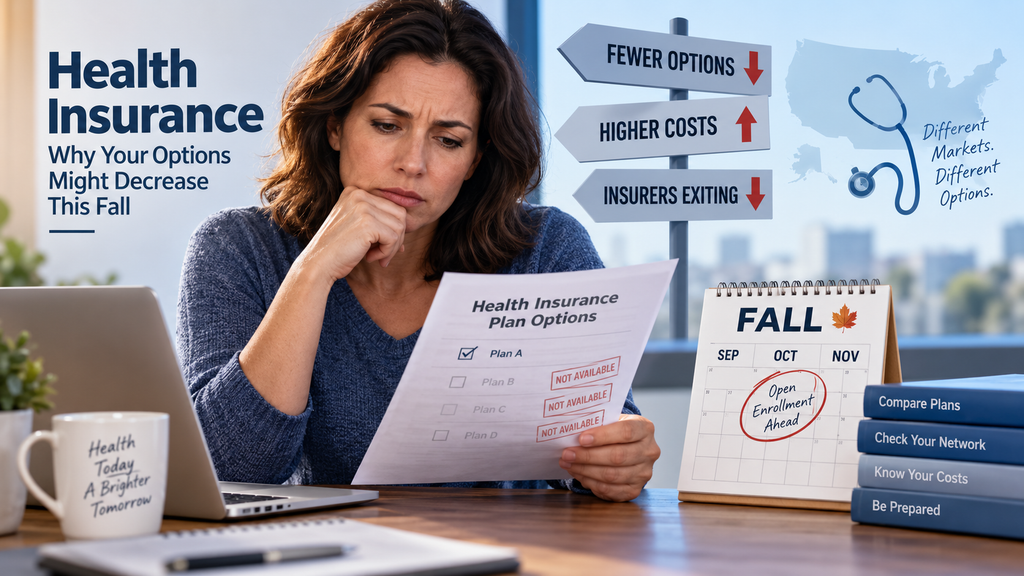
For some Americans, the selection of health insurance plans might decrease in the upcoming months.
Insurers are seeking higher premiums, and a number of carriers plan to exit certain areas of the ACA Marketplace.
At the same time, seven insurers have announced they will leave some Marketplace regions, while five others are set to expand into new areas.
This doesn’t mean every consumer will see fewer choices. Instead, your local health insurance options could change quite a bit this fall.
What’s Causing Health Insurance Choices to Decline?
Health insurance options may shrink as some insurers withdraw from certain ACA Marketplace areas and others shift the states where they offer plans.
These changes result from a combination of rising medical costs, shifting enrollment patterns, and the expiration of enhanced ACA premium subsidies.
Data from KFF shows the average number of insurers active in each state fell from 9.6 in 2025 to 9.0 in 2026.
This matters because the number of insurers in your region directly affects how many plans you can compare and select.
Are Health Insurers Pulling Back from the ACA Marketplace?
Yes. Several insurers have announced plans to exit certain regions of the ACA Marketplace for the 2027 plan year.
One notable example is Cigna, which has stated it will completely leave the individual market in all 11 states where it currently provides coverage.
However, the marketplace overall isn’t shrinking everywhere.
Actually, some insurers are entering new states, meaning certain consumers may see more plan options than in previous years.
The key point: national trends don’t always match what’s occurring in your specific region.
Will Health Insurance Prices Rise?
Possibly. Insurers are proposing a median 15% increase in premiums on the ACA Marketplace.
KFF analyzed rate filings from 276 insurers across all 50 states and D.C., showing a median proposed increase of 15%.
However, this doesn’t mean your premium will actually rise by 15%.
Your total cost will vary based on several factors, including:
- Age;
- ZIP code;
- Household income;
- Household size;
- Plan type;
- Metal tier;
- Eligibility for premium tax credits;
- Available insurers.
Therefore, your premium increase might not mirror the national average rise.
What Factors Are Causing ACA Health Insurance Premiums to Increase?
Premium hikes result from multiple causes, including rising healthcare costs and changes in the risk pool within the ACA Marketplace.
A major factor is that the enhanced premium tax credits, which were available through the end of 2025, have now expired.
For many households, this means a notable rise in their monthly health insurance expenses.
What Has Changed with ACA Premium Tax Credits?
The enhanced ACA premium tax credits expired in 2025, leading many Marketplace enrollees to face increased costs for their plans.
These expanded subsidies were initially introduced in 2021 to offer greater financial support to those purchasing Marketplace coverage.
After those subsidies expired, many people experienced higher out-of-pocket premium costs.
This adjustment particularly impacts individuals without access to employer-sponsored health insurance.
Are More People Choosing Bronze Health Plans?
Yes. KFF states that enrollment in Bronze plans on the Marketplace increased from 30% in 2025 to 40% in 2026.
At the same time, the percentage of consumers selecting Silver plans declined from 57% down to 43%.
Why does this matter?
This is because Bronze plans usually have lower monthly premiums but higher deductibles and out-of-pocket costs.
This makes them a suitable option for people who rarely need medical treatment.
But those who require healthcare often may incur significantly higher expenses when they use services.
What if Your Doctor Isn’t Covered by the New Plan’s Network?
Before you change health insurance plans, double-check your provider network. This detail is easy to overlook during Open Enrollment.
Make sure your new plan covers the following:
- Primary care physician
- Specialists
- Your preferred hospital
- Urgent care centers
- Mental health professionals
- Pharmacies
- Medications you need
This is especially important if you are currently receiving medical care.
A lower monthly premium isn’t beneficial if your preferred doctor isn’t included in the network.
Preparing Yourself This September
Although Open Enrollment hasn’t started yet, September is an ideal time to begin preparing.
Collecting essential information now can make your enrollment smoother when the time comes.
1. Carefully Examine Your Current Health Plan
Look over these key aspects of your coverage:
- Monthly premium
- Deductible
- Out-of-pocket maximum
- Doctors
- Hospitals
- Prescriptions
- Annual healthcare spending
Don’t rely solely on memory.
Check your actual healthcare expenses from last year.
2. Estimate Your Household Income for 2027
Your anticipated household earnings will affect your eligibility for Marketplace subsidies.
HealthCare.gov takes into account factors such as household size and estimated income to determine your available plans and possible savings.
Major shifts in your income may also affect how much you pay for health insurance.
3. List Your Essential Healthcare Providers
Write down the doctors and hospitals you want to stay covered by.
After that, verify their network participation once the 2027 plans become available.
This simple step can help you steer clear of expensive mistakes.
4. Review and Compare Plans After 2027 Options Are Available
Don’t renew your plan without checking out your alternatives first.
Compare your current plan directly with the options offered in your region.
This method provides a better understanding than just looking at monthly premiums.
What Insights Do Personal Finance Experts Offer on Health Insurance?
Top personal finance platforms in the U.S. are addressing health insurance from a variety of angles.
NerdWallet focuses heavily on comparing Marketplace plans, insurers, premiums, customer feedback, quality ratings, and options available by state.
Bankrate emphasizes affordability and examines various ways consumers can obtain private health insurance.
Investopedia highlights broader trends affecting healthcare users, including Medicare and insurance-related policy changes.
CNBC Select frequently covers healthcare topics by focusing on how medical costs and unforeseen health issues affect personal finances.
Which Important Details Are Often Overlooked in Health Insurance Guides?
Many health insurance tips focus mainly on selecting the best provider.
But for those dealing with coverage changes in 2027, a different question is crucial:
This article seeks to address that practical gap.
The best plan isn’t necessarily the one with the top national rating. It’s the one that matches your health needs, budget, and local provider network.
Why You Should Prioritize September
The biggest mistake is waiting until the enrollment deadline to start researching your plan options.
By September, you should have a solid understanding of your healthcare spending so far and which coverage features matter most to you.
This way, when 2027 plans and rates become available, you’ll be prepared to evaluate them quickly.
This is especially important this year because insurers are proposing significant premium increases and some carriers are changing their Marketplace participation.
Being prepared can help broaden your options, even if the overall Marketplace shrinks.
Author’s Perspective
Don’t wait for Open Enrollment to begin thinking about your health insurance choices.
This year’s data underscores why it’s crucial to start paying attention early: for 2027, insurers are proposing an average premium increase of 15%, and some plan to exit certain Marketplace regions.
Still, it’s inaccurate to claim that “health insurance is disappearing.”
That phrase is overly broad. The main takeaway is that your local health insurance options might change, so it’s wise to review and compare plans carefully.
If you’re self-employed, between jobs, approaching retirement, or buying coverage on your own, don’t just focus on the monthly premium.
A plan with a monthly premium $50 cheaper might end up costing you more if it has a much higher deductible or excludes your preferred doctor.
When fall arrives, don’t just renew your health insurance automatically. Take time to review your options, check your provider network, and carefully evaluate the costs.